In this guide (7 sections)
- What to keep in a safe at home – the short list
- Home safe or safe deposit box – where each document belongs
- Match what you keep in a safe to its fire rating
- What not to keep in a home safe
- Home safe moisture and mold problems owners run into, and the fix
- How to set up a home safe so the right person can open it
- Questions safe buyers ask
We earn a commission if you buy through links on this page, at no extra cost to you. It never changes what we recommend. How we make money.
The short answer
- Keep what you need fast and would struggle to replace: passports, birth certificates, Social Security cards, insurance policies, spare and bank-box keys, a modest amount of cash and an encrypted backup drive.
- Paper needs a Class 350 fire rating; USB drives and hard drives need Class 125, and the label should name who certified it.
- Originals you rarely need, such as deeds, car titles and paper savings bonds, are FDIC-suggested candidates for a bank safe deposit box.
- Large sums of cash and the only copy of anything irreplaceable do not belong in a home safe.
Keep the things you would need fast after a fire, break-in or lost wallet, and that would take weeks to replace: passports, birth certificates, Social Security cards, insurance policies, spare and bank-box keys, a modest amount of cash and an encrypted backup drive. Paper and digital backups need different fire ratings, and originals you rarely touch often belong in a bank box instead. That is our short answer to what should you keep in a safe at home.
I wrote this for someone with a new fireproof document safe and a drawer full of papers. We checked FDIC guidance and fire-rating tables, and read owner threads about what went wrong inside their own safes.
What to keep in a safe at home – the short list
A home safe should hold items that are hard to replace and that you may need on a day the bank is closed. The table adds the fire rating each one needs.
| What to keep | Why it belongs at home | Fire rating it needs |
|---|---|---|
| Passports, birth certificates, Social Security cards | Proof of identity after a loss or a lost wallet | Class 350 (paper) |
| Insurance policies, agent contacts, home inventory list | You need them in the first days of a claim | Class 350 |
| Will or power of attorney (original or copy) | Family must find it quickly | Class 350 |
| Spare house and car keys, safe deposit box key | Cheaper than rekeying; opens your bank box | Any |
| Modest emergency cash, a backup credit card | Works when cards or ATMs don’t | Class 350 |
| Everyday jewelry and watches | Worn often, too awkward to fetch from a bank | Any |
| Encrypted USB drive or hard drive with scans and photos | Restores records if paper is lost | Class 125 (digital) |
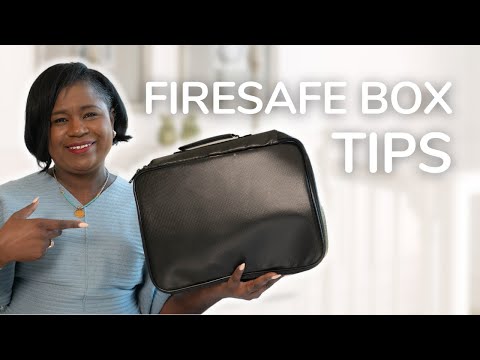
The video below walks through a similar list for a small fire box.
Home safe or safe deposit box – where each document belongs
Ask two questions about each item: will I need it within a day, and can it be replaced? Needed fast and hard to replace goes in the home safe. Rarely needed but hard to replace goes to the bank. Easy to replace needs neither.
The FDIC names originals of birth certificates, property deeds, car titles and paper U.S. savings bonds as good bank-box candidates. It also warns that a home safe “isn’t a true replacement” for one, since a burglar can reach it more easily. Our rule: keep a copy of anything stored in one place at the other. Who can open a bank box after a death depends on state law, so that is a question for your attorney, not for us.
Match what you keep in a safe to its fire rating
Paper and digital media fail at very different temperatures, so the fire class on the label decides what is safe inside. A Class 350 safe must keep its interior at or below 350°F for the rated time, which is meant for paper. Class 125 must stay at or below 125°F and 80% humidity, the level a fire-safe dealer, SafetyFile, describes as the point at which digital media is ruined.
So a USB stick in a paper-rated box may not survive a fire its neighbors do. Check who stands behind the number: a UL Classified rating is an outside lab’s test, an ETL mark is Intertek’s, and “fireproof” with no lab named is a manufacturer claim. Our guide on whether safes are really fireproof explains how to read the label.
The rating is also a time limit in a fire. US fire departments respond to an estimated average of 328,590 home structure fires a year, according to NFPA. One r/HomeImprovement reply warns that “Even if the safe is found after a fire, the contents are usually baked to flash point”. That is why we keep a scanned copy off-site too.
From our notes: A passport, a will and a USB stick looked like one pile until we sorted them by the 350°F and 125°F limits. Most top lists we read put “digital backups” in the same safe as the paper, with no word about the rating. When we lined the items against the class table, the drive was the only thing on the list that a typical home document safe isn’t rated to protect. So we now treat the drive as a convenience copy and keep the real backup in the cloud.
What not to keep in a home safe
A home safe is the wrong place for anything that is safer, cheaper or healthier somewhere else.
- Large sums of cash. The FDIC says cash outside a deposit account isn’t FDIC-insured and earns no interest.
- The only copy of anything. Scan it first and store the copy off-site.
- Medicine, food and batteries. A sealed, damp box speeds up spoilage.
- Pearls, old photos and antique paper, unless you control humidity, as moisture builds inside.
- Things you use every day. Constant opening wears the lock.
Home safe moisture and mold problems owners run into, and the fix
Fire insulation holds water, so a closed fire safe can turn papers moldy within weeks. “Fireproof safes are notorious for holding moisture,” one Collectors Universe member wrote. Another said, “In the time frame of a couple of weeks, the paper work started to mold.”
The fix we found in owner threads:
- Seal documents and cash in zip-top or other resealable plastic bags, as the FDIC also suggests against water.
- Add a rechargeable desiccant canister, and expect to recharge it; one High Road gun-safe owner said his silica packs turn from orange to blue “within a week or two everytime.”
- Open the door for a few minutes every week or two to let moisture out.
- Keep the safe out of garages and bathrooms; our safe dehumidifier guide covers rods for bigger safes.
How to set up a home safe so the right person can open it
A home safe only helps if it stays put and someone you trust can open it when you can’t.
- Sort papers into labeled folders: identity, home and insurance, vehicles, money, medical.
- Put a slim grab-and-go envelope in front with IDs, policy numbers, a little cash and spare keys.
- Bolt a small safe to the floor or a wall, since a light box can be carried out; here is how to bolt down a safe.
- Give the combination or backup key to one trusted person outside your home.
- Review the contents once a year and after a move or policy change.
If you still need the box itself, our best home safe picks compare fire and theft protection, and the safe buying checklist helps you size one to this list.
Questions safe buyers ask
What should you not keep in a home safe?
Large sums of cash, the only copy of anything irreplaceable, medicine and perishables, and items that need controlled humidity. The FDIC notes that cash outside a deposit account is not FDIC-insured and earns no interest.
Should I keep my will in a home safe?
Many people keep the original in a home safe or with their attorney, and a copy elsewhere. What matters is that your executor knows where it is and can get to it, so ask your attorney what works under your state's rules.
Can I keep a USB drive or hard drive in a fireproof safe?
Yes, but a typical Class 350 safe only keeps the inside at or below 350°F, which is meant for paper. Digital media needs a Class 125 rating (125°F), so keep a second encrypted copy off-site or in the cloud.
Why do papers get moldy in a fireproof safe?
Fire insulation holds moisture and the door seals it in. Owners fix it by sealing documents in zip bags, adding a rechargeable desiccant, and opening the safe now and then to air it out.
How much cash should I keep in a home safe?
Only what you would need for a few days without cards or ATMs. Larger amounts are safer in an insured bank account, as the FDIC advises.
Why you can trust this guide
- Products are checked against manufacturer specifications, user manuals and long-term owner reports.
- Each pick is scored on the Best Safe Score: security (lock and build), fire protection, access, capacity and value. Scores come from published specs, independent ratings and owner reports, not hands-on testing.
- We never accept payment for placement. Affiliate commissions do not affect rankings.
Last reviewed . Read our research process and editorial policy, or report an error.
Sources
- FDIC: Safe Deposit Boxes, Home Safes and Your Valuables
- INKAS: Fire Safe Ratings – Class 350, 150 and 125
- SafetyFile (FireKing): UL Fire and Impact Ratings
- NFPA: Home Structure Fires
- Liberty Safe: What Families Should Always Store in a Safe
- Collectors Universe forum: Any risks of humidity in a safe?
- The High Road: Rust issues
- r/HomeImprovement: Where to store a safe

Best Safe Editorial Team
Research & editorial
We research home safes, gun safes and fireproof safes for people protecting firearms, documents and valuables: lock types (mechanical dial, electronic keypad, biometric, key), steel gauge, bolt work and pry resistance, independent fire ratings from UL or Intertek (ETL), how fast you can get in under stress, bolt-down options and legal storage rules. Every guide follows our published research process and editorial policy.